Is San Diego oversaturated? Short-term vs long-term rental, by the numbers
Owners considering short-term rental in San Diego often hear that the market is oversaturated. The city's licensing data does not support that in its simplest form, because whole-home short-term rentals are capped by law. The more useful question is whether a given home earns more as a short-term rental or as a long-term one, after costs and effort.
As of November 2026
Figures below come from city, HUD, state and San Diego Tourism Authority sources, each linked where it appears. License counts are as of November 6, 2026 and change weekly.
Is San Diego oversaturated with short-term rentals?
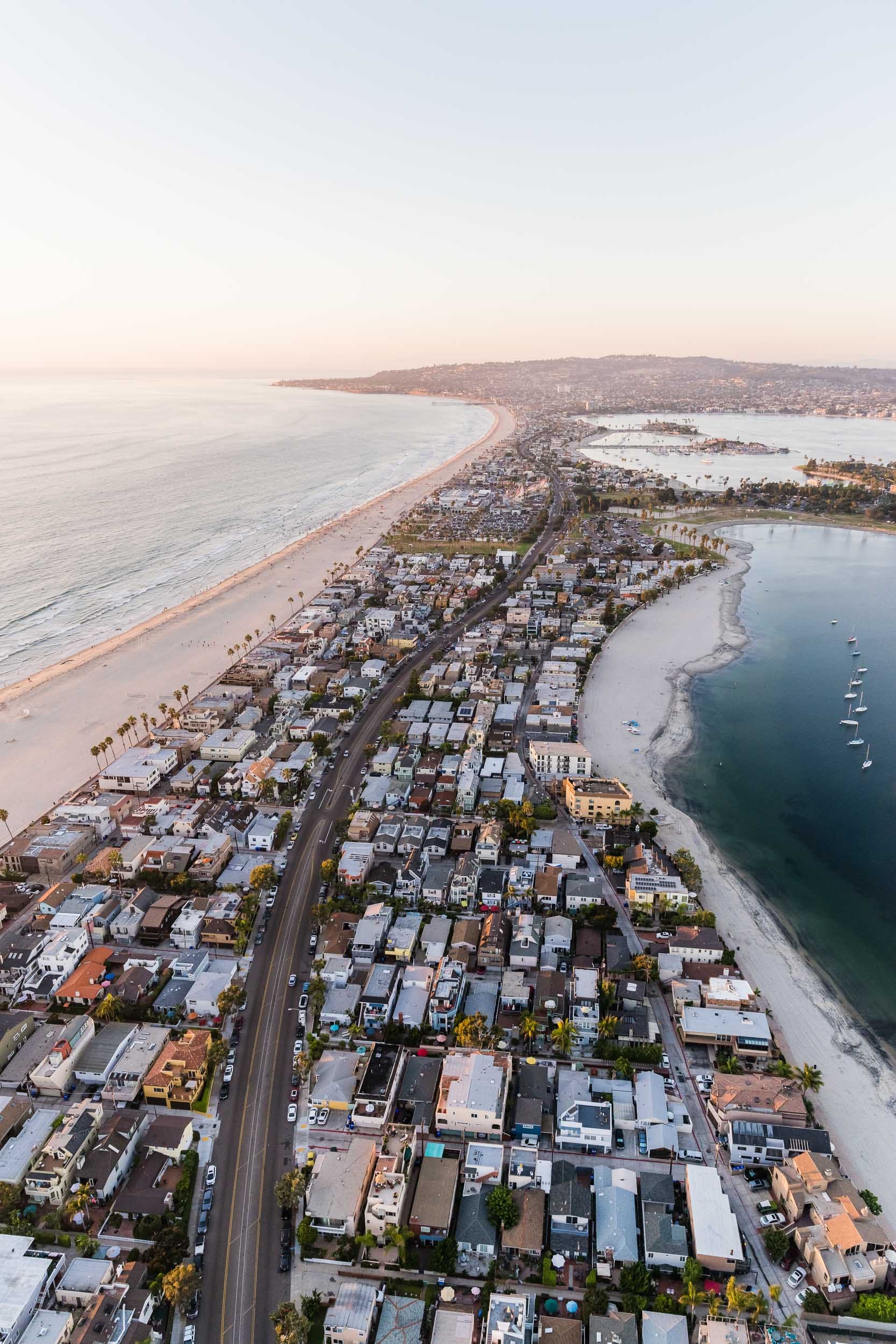
Not in the sense of unlimited supply. The city caps whole-home licenses at 1% of housing units outside Mission Beach and 30% of housing units inside it. As of November 6, 2026, the City Treasurer's STRO page showed 4,863 whole-home licenses issued outside Mission Beach with 798 still available, and none left in Mission Beach.
- Tier 3 (whole home, outside Mission Beach): 4,863 issued, 798 remaining, a cap of about 5,661.
- Tier 4 (whole home, Mission Beach): 1,099 issued, none remaining, so supply there cannot grow until licenses return to the pool.
- Tiers 1 and 2 (20 days a year or fewer, and home sharing in the host's own residence): no cap.
Under the municipal code, renting a whole home for stays under one month, more than 20 days a year, requires one of those capped licenses, and a host "may only hold one license at a time." Competition exists, but inside a fixed ceiling. Our STRO license tracker follows the count.
Demand is large by comparison. The San Diego Tourism Authority reports 32.4 million visitors to the county in 2025, 17.8 million of them overnight, and $14.4 billion in direct visitor spending. Hotels averaged 72.2% occupancy at $213 a night. These are county-wide figures that include hotels, but they set a whole-home supply capped in the low thousands against millions of overnight stays.
What does a long-term rental earn in San Diego?
HUD's fiscal year 2026 Fair Market Rents for the San Diego metro are $3,001 a month for a two-bedroom, $3,998 for a three-bedroom and $4,845 for a four-bedroom. These are HUD's estimate of typical rent, including utilities, for a standard-quality unit; a renovated coastal home will usually lease higher.
The market is softening for landlords. HUD's February 2026 market report put average apartment rent at $2,401, flat from a year earlier, with vacancy up to 5.4% from 4.7%. About two-thirds of the 7,975 apartments delivered in 2025 were absorbed, and about 11,400 more rental units were under construction. New supply tends to slow rent growth for existing homes.
What rules apply to each option?
Short-term rental
- License: $41 application plus $1,129 for a two-year whole-home license. It does not transfer on a sale; see buying or selling a home with an STRO license.
- Room tax: guests pay transient occupancy tax of 11.75%, 12.75% or 13.75% depending on the home's zone, collected by the operator.
- Work: cleaning, guest messaging, pricing and repairs every week.
Long-term rental
- Rent increases: California caps them at 5% plus inflation, up to 10%. For San Diego, the Attorney General lists a maximum of 8.8% for increases taking effect from August 2025 to July 2026, and 8.2% from August 2026 to July 2027. Units newer than 15 years are exempt, and single-family homes are covered when a corporation owns them.
- Tenant protections: the city's tenant protections ordinance applies from the first day of a tenancy longer than three months, and a no-fault move-out entitles the tenant to two months' rent (three for seniors and people with disabilities).
- Work: screening, collection and repairs, with few turnovers.
Furnished stays of a month or longer sit between the two. They need no STRO license and carry no room tax, usually earn more per month than an unfurnished lease in coastal areas, and turn over far less often than short stays.
How should an owner compare the two?
Compare net income. Take the rent the home could realistically lease for, and ask what it would need to clear per booked night, after cleaning, utilities, supplies, furnishings and management, to beat it. At HUD's three-bedroom rent of $47,976 a year, a short-term rental would need to net about:
- $320 a night at 150 booked nights;
- $240 a night at 200 booked nights;
- $192 a night at 250 booked nights.
"Net" means after the costs a long-term landlord usually does not carry: cleaning, utilities, internet, consumables, platform fees and replacing furnishings. Leave the guest's room tax out of both sides, and substitute a real lease comparable if the home would rent above HUD's figure.
Some inputs are not dollars:
- Who does the work. A short-term rental needs attention every week; a lease mainly at move-in, move-out and repairs.
- Personal use. A short-term calendar can hold weeks for the owner; a leased home cannot.
- Licensing. A whole-home license must be renewed every two years and ends if the home is sold.
- Exit. Ending a tenancy follows just-cause rules and relocation payments; a short-term calendar can close after the last booked stay.
Which homes suit which option?
Long-term leasing tends to fit homes that cannot get a whole-home license (including any Mission Beach home without one today), homes far from visitor draws, and owners who want steady income with little involvement. Short-term rental tends to fit homes near the coast or other demand, finished and sized for guests, with a license available. Neighborhood matters too: our comparison of La Jolla and Pacific Beach shows two markets a few miles apart with different guests, and our guide to what a San Diego home could earn covers rate, seasonality and design.
Homes that photograph well and sleep groups usually command higher nightly rates; our post on design choices that lift the nightly rate covers the specifics. A modest inland home near a large employer, by contrast, may lease quickly at a strong rent and draw few vacation guests.
Is it too late to start a short-term rental in San Diego?
Outside Mission Beach, no: licenses remained available as of November 6, 2026. What has changed is where competition happens. With supply capped, homes compete on rate, reviews, photos and pricing rather than scarcity, so a well-run home in a strong location can clear the long-term bar while an average setup with static pricing may not.
Cardo reports that the homes it manages outperform their market by up to 32%. For a specific home, owners can request a free earning estimate or review what management includes on our fees page.
General information about San Diego rules and public data as of November 2026, not tax, legal or financial advice. Confirm current rules with the City of San Diego and a qualified professional.
What could your San Diego home earn with Cardo?
Get a free, no-obligation earning estimate built for your exact home: your address, size, and finish run against live San Diego demand. You'll see the annual revenue we project, how it compares to your current market, and how we'd get you there. Most estimates come back within one business day.
Get my free earning estimate